


"You Put It on a Missile and Pray": The "Eye" That Makes Strikes in Iran Possible
In a classified lab run by Elbit and the Ministry of Defense, cameras are being built that allow the IDF to photograph targets from 500 km away, at a resolution of about 30 cm per pixel.
The war in Iran underscored the need to expand intelligence capabilities, and the Intelligence Directorate says that despite AI, "there is no process today that simply runs on its own." Cleared for publication by the military censor: a first look at the place where capabilities are built from glass, and where people pray they survive the ten dangerous minutes on the way to space
From the outside, it is hard to guess what lies behind the walls of one of the buildings at Elbit Systems' development center in central Israel. We walk with the lab managers along the paths of the pastoral campus, between office buildings and development facilities, until we reach a building constructed specifically to produce one of Israel's most important strategic capabilities. Here, far from Iran's ballistic missile production and launch sites, they make the cameras that allow the defense establishment to know what is happening hundreds of kilometers away, without sending an aircraft or inserting an agent.
At the entrance to the campus, blocking stickers were placed over our phone cameras, and we were asked to declare any photography and recording equipment we had with us. The excitement among the staff is evident, and it is clear that every word is carefully weighed before it is spoken, both because of the classified technologies and because of the sensitivity of the times. After all, this is the first press visit to the National Space Camera Development Lab of Elbit and the Ministry of Defense. Still, once you are past the security arrangements, it is hard to say anyone is trying to spare us explanations.
A double door separates the industrial corridor from the clean room, where even a tiny dust particle could damage a system that takes years to build. We enter the sterile gowning room. First overshoes, then a cover for hair and beard, a protective suit, another layer over the shoes, and gloves. Only when we are all properly wrapped can we enter the lab. The instruction is simple: don't touch anything unless you have received explicit permission. We tried, but we didn't get it.
Inside, a different world is revealed. Large and remarkably lightweight space cameras stand at various stages of assembly. Large mirrors, optical systems, measurement rigs and test chambers fill the space. Some components are protected by additional sterile tents, because even the room's high level of cleanliness does not meet their standard. Every action is carried out slowly, almost ceremonially. There is no room here for unnecessary movement.
M., head of the Space business unit in Elbit's ISTAR & EW Division, leads us on the tour. Beside him is A., a senior member of Elbit's space unit, who is responsible, among other things, for managing the facility and the complex processes carried out in it.
Beneath the lab floor we are standing on lies a large underground space containing huge concrete blocks mounted on hydraulic systems designed to isolate vibrations. The measurement and calibration rigs on the floor above rest on them. In fact, the entire building was designed around this infrastructure, not the other way around. The reason is that even a vibration barely noticeable in everyday life, even one caused by a person walking nearby, could disrupt the delicate optical measurements. In a place that makes a camera that will need to identify small details on the Earth's surface from hundreds of kilometers away, sometimes the Earth itself is a disturbance.
"Every half hour, they want to see if the launcher has moved"
The capability born in this lab takes on an entirely different meaning when Iran is mentioned. Drones alone cannot provide continuous 24/7 intelligence coverage over Iran and distant arenas without satellites.
The distance between Israel and Tehran and the vast territory of the Islamic Republic simply do not allow it, certainly not in a multi-front war that stretched all of the IDF's collection and sensing assets to the limit. A spy satellite, by contrast, does not need to penetrate Iran's airspace or evade anti-aircraft missiles. It orbits the Earth, passes over areas of interest and photographs them at regular, frequent intervals. "Reaching, controlling and maintaining an intelligence grip on seven arenas with aircraft is an impossible mission," M. explains. "You can't be permanently above all the sites you need."
The lab developed cameras installed on Israel's Ofek series of observation satellites, manufactured by Israel Aerospace Industries, as well as on the OPTSAT-3000, NAOS and Venus satellites. The information produced by the Israeli cameras is received, among others, by the Intelligence Directorate's Unit 9900, which operates a collection system using the Ofek spy satellites. "Israel has many satellites in space, and there is a whole collection system," M. explains. "The branches come and say: we need you to photograph this place and that place, in Syria or in Iran, at a specific time."
The images sent down from space via electromagnetic waves land within minutes in Unit 9900's underground operations center. After the files are downloaded, initial processing begins, in which the unit's personnel turn the images into operational intelligence used to build the intelligence picture of the enemy, track targets, identify suspicious activity and provide early warning.
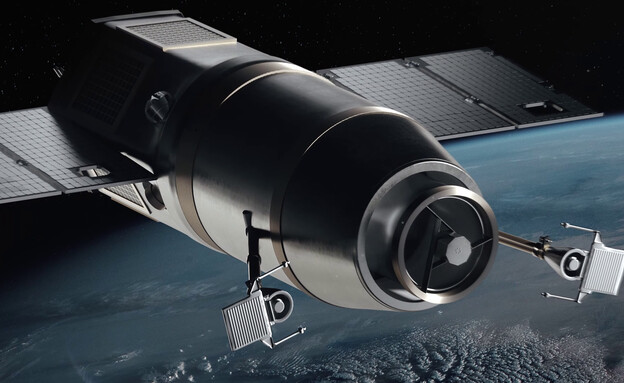
The images sent down from space via electromagnetic waves land within minutes in the underground operations center. Observation satellite rendering | Photo: Elbit Systems
"The advantage is that you are less limited by space," an Intelligence Directorate source tells N12 Magazine. "It gives you the ability to reach areas and spaces that aircraft can't reach, not as easily anyway." According to him, intelligence from space has become an integral part of the IDF's operational activity, and in many cases serves as a real force multiplier.
But there is one limitation that even the most advanced camera cannot eliminate: a single satellite does not hover over Tehran and photograph it nonstop. It is in constant motion, and its orbit does not bring it back to the same point on every pass. To track a target that changes its location, a particularly sharp image is not enough. You also need to photograph it again and again, frequently.

"Every half hour they want to see the same point, to see the launcher, whether it has moved" | Photo: Elbit Systems
This is where the next generation of space cameras comes in. "We always want revisit," M. explains. "Every half hour they want to see the same point, to see the launcher, whether it has moved." The solution being developed in the defense establishment combines smaller, cheaper cameras that can be mass-produced and installed on a constellation of small satellites and microsatellites.
The Pluto camera, which Elbit is working on, is designed for exactly this need. It is compact compared to the company's large cameras, but it makes it possible to think about a denser satellite constellation that will return to the same areas at high frequency.

"We work around the clock and it's not enough." Elbit employees in protective suits at the space camera lab | Photo: N12
500 km above Iran: The hunt for mobile launchers
The operational significance is especially clear in relation to Iran, where one of the biggest challenges is locating mobile missile launchers. To camouflage them, the Iranians installed Shahab and Emad ballistic missiles on trucks that look from the outside like ordinary container trucks. When they reach a pre-prepared launch site, the container opens, the launcher rises out of it and the missile is launched, almost like in the Transformers movies. The Iranians have even published footage of the process in the past.
During the day, these trucks move along roads alongside civilian vehicles, which makes them very difficult to locate and strike. To distinguish them from regular trucks, analysts rely, among other things, on AI analysis of their structure, monitoring of driving patterns and identifying the sites they leave from. This is where observation satellites come in, making it possible to photograph the same areas again and again, detect changes and track the movement of suspicious vehicles. The higher the imaging frequency, the greater the chance of locating a launcher that has left its hiding place before it reaches the launch site and disappears again.
The IDF says that over the last three years of war, the volume of visual information from space reaching the Intelligence Directorate has grown, alongside a continuous improvement in the quality of the products. This means an increasing load on the interpretation teams, who must analyze and monitor enormous amounts of information.
To keep up, the Intelligence Directorate is integrating artificial intelligence systems and information extraction algorithms, but emphasizes that these do not replace the human analyst. "There is no AI or information process today that simply runs on its own," an Aman source explains. According to him, the processes are carried out under the control and close supervision of analysts who undergo rigorous training and certification before joining operational activity.
Alongside the small cameras, Elbit is also developing a more advanced generation of large, ultra-high-resolution cameras, about which no further details can be given. M. is sparing with his words: "The next generation is significantly better, bigger, with more capabilities."
50,000 images and one elimination in Tehran
Unit 9900's visual intelligence system played a decisive role in gathering intelligence ahead of the opening strike of Operation "Roaring Lion," which included targeted eliminations of senior regime officials, chief among them Supreme Leader Ali Khamenei. Over the 40 days of the operation, Israeli spy satellites took more than 50,000 images over Iran, more than a thousand a day on average. During the operation, information was also transmitted for the first time from a satellite directly to the cockpit of a fighter jet to help guide it in real time on a special mission. At the same time, SAR radar satellites provided collection capability at night and in cloudy conditions.
The information collected is used to locate surface-to-surface and surface-to-air missile batteries, plan safe flight routes and build the target bank. The Intelligence Directorate explains that one of Unit 9900's main advantages is the combination of image interpretation with precise terrain mapping. "In the end, every target needs a geographic attribution and a connection to a place," an Intelligence Directorate source explains.

Ahead of launch, the camera's weight is reduced without compromising its rigidity and stability | Photo: Elbit Systems
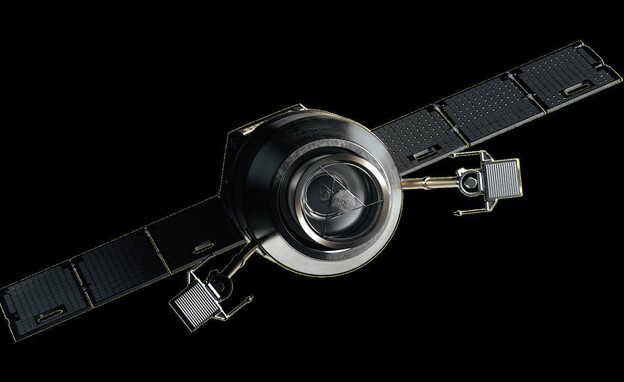
"We need the system to be able to withstand this extreme difference" | Photo: Elbit Systems
But the analysts' work does not end the moment Air Force jets drop their munitions. By comparing images before and after the strike, they carry out battle damage assessment (BDA) to determine which targets were destroyed and where a repeat strike is needed, information that may already affect the next sortie. "It's a kind of full cycle," the military source explains. "You start a process and you also close the loop on it and verify success, or whether you need to return for a follow-up strike." According to him, this is continuous tracking of the target, from the start of the intelligence work to closing the operational loop.
Even in these tense days, when another round with Tehran seems a matter of time, the satellites continue to monitor the rehabilitation and rebuilding of military facilities damaged in the strikes, the transfer of weapons, the movement of launchers and activity at nuclear sites. Their products are used to expand the target bank and to systematically analyze, in real time, the changes taking place on the ground. For example, satellite images exposed a construction surge at "Pickaxe Mountain," about a kilometer and a half south of the Natanz nuclear complex. In July, the Wall Street Journal reported that Israeli intelligence estimates Iran has moved thousands of uranium enrichment centrifuges into tunnels deep inside the mountain.
When I ask M. whether the products the cameras delivered during the war surprised even their developers, he says no. "We weren't surprised. We knew this capability and knew what level it could reach." According to him, the significant change actually happened among the top brass: "We were glad that the understanding sank in among decision-makers and the military, who realized how strategic this is and that it needs to be expanded significantly. You can really see the 'shift' the war caused."
Four months for one mirror
The large cameras include a primary mirror about 70 centimeters in diameter. The camera itself weighs about 130 kilograms, next to nothing in terms of a satellite that can weigh up to half a ton.
We stop in front of one of the mirrors: a large, lightweight optical surface that must survive a violent journey to space and then do the job it was sent beyond the atmosphere to do. The mirror starts as a block of glass weighing about 200 kilograms, but in a special machining process about 90% of the raw material is removed, creating a honeycomb-like structure on its back side that significantly reduces its weight without compromising its rigidity and stability. Then the polishing stage begins, which lasts about four months on a machine running around the clock. Even a tiny distortion on the mirror's surface could impair image quality from hundreds of kilometers away.
But building the camera is only half the job. Before launch, it undergoes a series of tests that could almost be described as "torture." We pass by shaker rigs that simulate the jolts of launch and stop in front of a huge vacuum chamber, big enough for people to walk into. The air is pumped out of it, and the cameras are exposed to cycles of extreme heat and cold. "That means between minus 40 and plus 70-80 degrees," M. explains. "We need the system to be able to withstand this extreme difference."
But this technological marvel, reserved for space powers only, could not exist without the right workforce.
Looking at them in the lab, it is hard not to think about the Israeli industry's severe shortage of technicians, practical engineers, senior engineers and production floor workers, without whom it will cease to exist. The image of technological education is eroding, and these fields of study are no longer as popular as they once were, partly due to the neglect of technological and vocational education.
I ask A. whether Israel has enough skilled people capable of doing this work. "In my opinion, no," she replies. "It takes three or four years to train an employee to the level of expertise we need. For an engineer, a technician and an optician alike, it takes time to reach a very high professional level."
"We work around the clock, and it's not enough"
Elbit says demand for space cameras is growing, and the company is already preparing for a significant expansion of its production capabilities. M. says that in a nearby building, a new clean facility is being built, three times the size of the one we are touring, along with additional measurement rigs and vacuum chambers. "We work around the clock, and it's not enough," he says. "Our production needs go far beyond that."
The growing need for satellite intelligence is also felt on the operational side. "Both the campaign in Iran and the ground maneuver in Gaza, as very, very different as these two campaigns are, proved how much the connection to the terrain, to geography and to visual information has very, very great significance and value," says an Intelligence Directorate source. "It's impossible to imagine a campaign without it."
Demand for the Israeli technology is not limited to the IDF. Elbit also supplies space cameras to foreign customers, including Luxembourg, which purchased a satellite equipped with the Israeli Jupiter camera for NATO purposes. "The Americans and the Europeans can deliver the same products, but with a satellite that is about twice the size," M. explains. Even at a time of diplomatic tension and restrictions on defense cooperation, this Israeli technology is actually in demand in Europe. "In the end, the products speak for themselves. It's not because of our pretty eyes, and certainly not out of Zionism."
That is why representatives of 24 companies arrived this week at the Space Tech Expo Europe conference in Germany, in the largest Israeli space delegation to date. M. flew there too. "There aren't many countries left in Europe that cooperate nicely with Israel, and Germany is one of them," he says. "Here, unlike the arms exhibition in Paris, there was no debate of 'will you participate or won't you.'"
Ten minutes of hell
All the years of work come down to one moment in which the lab staff no longer have any control over what happens: the launch. After two, three and sometimes three and a half years of work, the camera is installed on a satellite and sent into space. "People send satellites into space, but we send large, fragile glass," M. says.
He describes the first minutes as "ten minutes of hell." Even when the satellite safely reaches its orbit, the tension doesn't end. First they check that the systems power up and function, and then a calibration process begins that can take about three months, until the sharp images the camera was built for are received.
"Every camera we launched made it through safely and delivered the product required of it," A. says proudly. But the excitement does not diminish. "When you're part of building this camera, even when it goes up on the truck you get so emotional. It's like giving birth, really. In the end, you put all of this on a missile and pray."
This article was originally published in Hebrew on N12 (mako) and is republished here in English translation with permission.


