

Where Pilots Rehearse for War
How Elbit Systems’ Mission Training Center helped the IAF prepare for the most complex operations of our time.
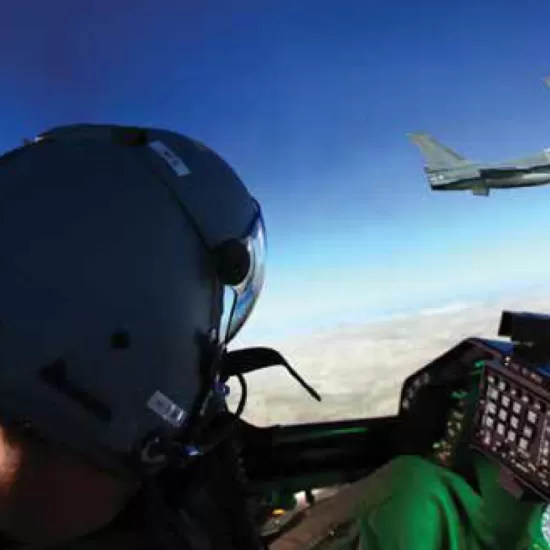
In recent years, Elbit Systems’ Fighter Aircraft Mission Training Centers (MTC) have become a cornerstone of the Israeli Air Force’s operational readiness — not only for fighter squadrons, but also for transport and support aircraft such as the C-130 cargo plane.
Developed to replicate real-world combat and mission environments with unmatched fidelity, these simulators allow pilots and crews to train together, communicate in real time, and rehearse complex missions that span from deep-strike operations to long-range airlift under threat. Behind every successful mission stands this quiet, high-tech infrastructure — a training ecosystem that evolves as fast as the battlefield itself.
Delivered to the Air Force in 2013, the MTC has since evolved into a fully immersive mission-rehearsal environment, mirroring real-world combat scenarios with exceptional realism. It’s where pilots and squadrons prepare for what they might one day encounter – and where they did, in fact, train for one of the most complex air operations ever carried out.
A Full Mission, from Start to Finish
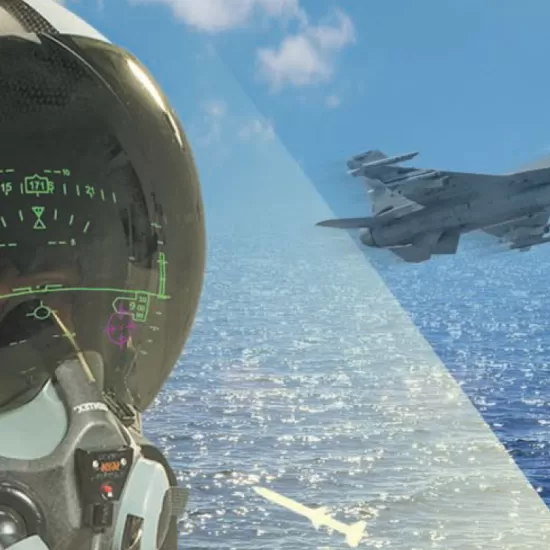
Unlike legacy simulators, the MTC supports complete mission cycles – planning and briefing, execution, and debriefing – all inside a single, connected environment. Built on Elbit’s OneSim technology, the system can simulate thousands of entities and complex threat behaviors driven by adaptive AI. Aircrews train as full squadrons, communicate in real time, and fly coordinated missions that include intercepts, defensive maneuvers, and air-to-air engagements under extreme conditions.
As the regional threat landscape changed, so did the training. A senior Business Development Officer in Elbit’s Simulation & Training unit recalls how new threats were integrated quickly. “When intelligence reported a new surface-to-air battery or tactics we hadn’t seen before, we built them into the trainer within days,” he says. “That let pilots rehearse against those threats before facing them in real operations.”
The MTC’s open, modular architecture made rapid updates possible. New codes were written, data models were adjusted, and previously unseen aircraft were added to the virtual battlespace. Even weapon types and electronic-warfare profiles were updated as intelligence evolved.
Training for the Unexpected
Weeks before the large-scale Iranian drone and missile attacks of April and October 2024, the Air Force identified a new type of challenge: hundreds of simultaneous inbound threats. Within two weeks, Elbit’s team created a realistic simulation featuring 300 UAS and cruise missiles, allowing the IAF to rehearse its defensive responses ahead of the actual attack. The exercise proved invaluable. “The ability to design and deploy that scenario so quickly gave the squadrons a major operational edge,” he exclaims.
Certain aspects of training can’t be replicated in live flight – dense electronic warfare, coordinated missile defense, or GPS-denied conditions. The MTC bridges that gap. Its high-fidelity visuals synchronized mission systems, and shared tactical displays immerse aircrews in scenarios that mirror real combat while maintaining complete safety. In doing so, it reflects the “Train as You Fight” doctrine: preparing crews to perform exactly as they would in war, without the operational risk.
To enhance realism, the MTC’s “smart entities” mimic enemy decision-making. Powered by AI-driven behavior models, these virtual opponents adapt, react, and counter pilots’ actions in real time. No two runs are ever identical, keeping pilots mentally and technically ready for what real adversaries might do.
Beyond Fighter Jets
Originally developed for fighter aircraft, Elbit Systems has since expanded the concept to include a dedicated Mission Training Center for heavy transport aircraft, including the C-130 cargo plane. This dedicated center allows aircrews from transport squadrons to train for complex, long-range missions under realistic threat environments — and to integrate seamlessly with fighter units in joint operational rehearsals. Together, the two MTCs create a unified training ecosystem that reflects the full spectrum of modern air operations.
The MTC’s success has drawn international attention. Air forces around the world are now seeking similar capabilities – simulators that evolve with the battlespace, integrate live intelligence, and prepare crews for missions that are difficult to replicate elsewhere.
For Elbit Systems, the upcoming IITSEC 2025 exhibition in Orlando will be another opportunity to demonstrate that vision – one defined by a principle proven in the most demanding context: when the threat changes overnight, training must be ready by morning.