

Mobile Command, Maximum Impact
Say goodbye to old school tent HQs. The future of battlefield command rolls in with trailblazing mobility and tech.
The need to manage battlefield operations directly from the field has grown increasingly important in recent military conflicts around the globe. Rather than depending solely on remote headquarters that may be hundreds of kilometers away from the action, modern military forces understand the importance of being close to forces in order to respond quickly to threats on the ground.
In response, Elbit Systems' C4I and Cyber Division has developed several advanced solutions that improve the flexibility and mobility of tactical battlefield management. George, the division's Head of project management department under the Strategic Procurement & Subcontracting Unit, discusses these innovations and their applications in warfare.
Introducing the Rhino™
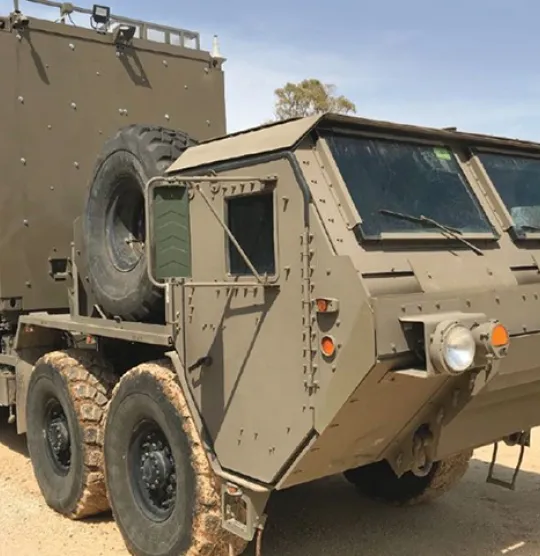
This mobile, armored command vehicle, known as the Rhino™, replaces the traditional deployed command post. Instead of relying on a command tent equipped with conventional tactical communications like phones, radios, and tablets.
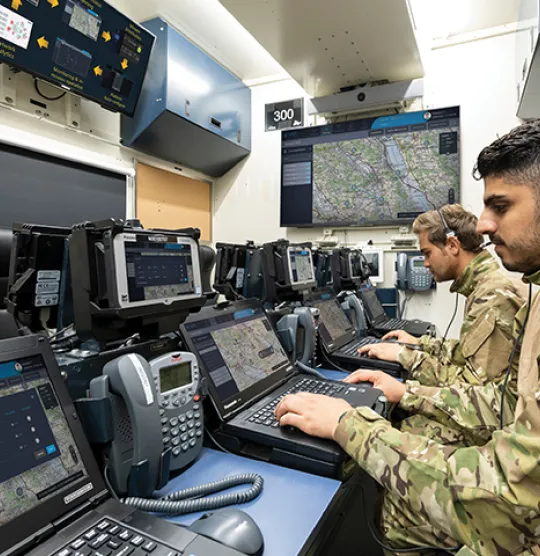
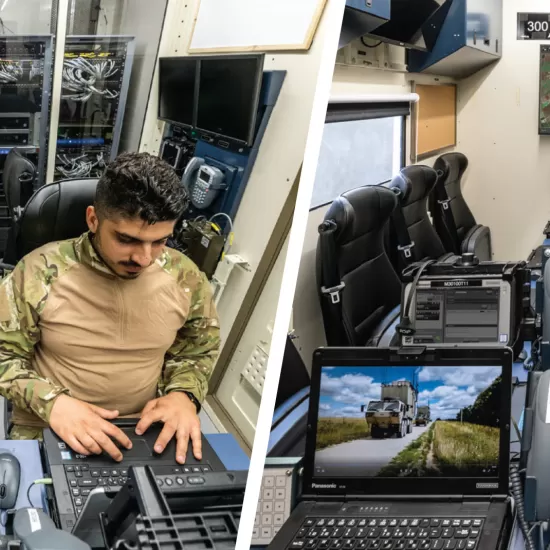
The Rhino™ serves as an easily deployed advanced mobilized Command and Control work environment that supports integrated combat scenarios at various command levels-from commanders in the field to high-echelon commanders. The self-contained and self-supportive Rhino™ allows independent work or as part of a tactical HQ, whether on the move or stationary. "With this platform, commanders can issue real-time directives to forces in the field, swiftly adapting to both threats and mission objectives," George said, describing the capabilities of Rhino™ "It houses command stations equipped with C4I workstations including computer setups and comprehensive networking solutions, including both SATCOM and high-capacity tactical links for continuous video, voice and data communication with the field units and higher echelons even while on the move. This advanced command shelter supports a staff of up to ten personnel, featuring two commanders’ posts and has space for four technicians."
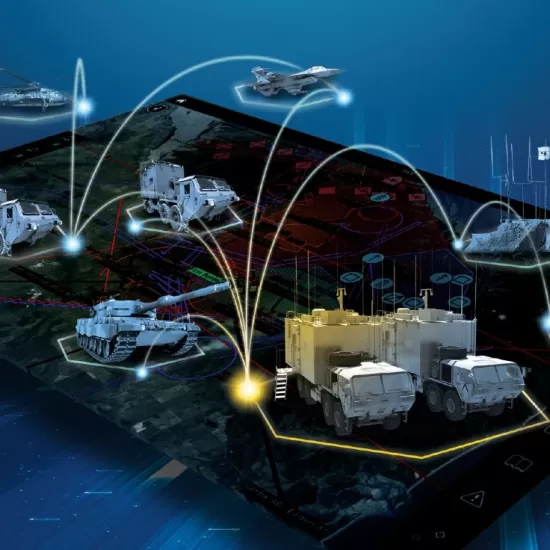
Highlighting the key advantage of the Rhino™, George said that it is able to connect with other units, "thereby enhancing the network of mobile command options across the battlefield. This networked approach allows each vehicle to concentrate on specific tactical needs, whether logistics or combat operations, streamlining command and communication processes.
"The mobility of these command-and-control platforms significantly reduces their vulnerability to enemy ambushes compared to stationary headquarters, which are more prone to attacks," George added. Moreover, the Rhino shelter can be supplied with armor compliant with up to STANAG Level 4, greatly enhancing their protection against missile strikes and other threats.
Expanding Control
"Higher levels of tactical command require robust, field-deployable communication and command platforms," explained a senior official from Elbit Systems' C4I Division. "While mobile command centers with limited workstations sometimes fall short, we also offer solutions such as forward command posts and command rooms for brigade and division levels, which are equipped with a broader array of technological tools."
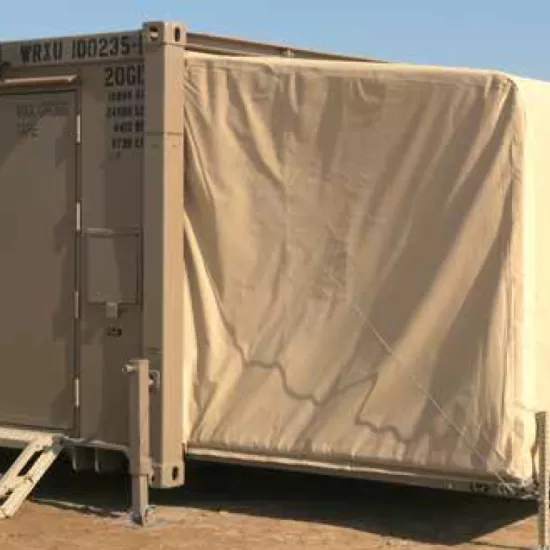
The expandable Command and Control Shelter, true to its name, offers exceptional protection and expandability. It accommodates nearly 30 workstations, each equipped with advanced technology crucial for managing wartime scenarios. "These shelters serve as vital communication links between field tactical forces and the upper echelons of command, extending all the way to central control headquarters," George said.
Elbit Systems' C2 shelters stand out for their rapid deployment capabilities and enhanced durability, offering significant advantages over the simpler tents previously used. The Expandable C2 Shelter not only features generator hookups but also includes meeting rooms, war rooms, air conditioning, NBC (Nuclear, biological, and chemical) protection and advanced communication systems that exceed the standards of typical field-deployed equipment.
The Swedish army has made a significant acquisition of Elbit Systems’ communication shelters as part of its digital overhaul, highlighting the increasing demand for Elbit Systems' technology within the C4I Division.
"They are in the midst of a digital overhaul, necessitating a stable and powerful tactical communication infrastructure to support battlefield networking," George stated.
FAQ
How do commanders manage operations while on the move?
Mobile command centers enable commanders to maintain communications, situational awareness, and command-and-control capabilities while operating close to frontline forces.
Why are armies replacing command tents with mobile command centers?
Mobile command centers provide greater protection, faster deployment, improved connectivity, and reduced vulnerability compared to traditional field headquarters.
What is a mobile command center used for?
A mobile command center serves as a deployable headquarters that supports battlefield management, communications, planning, and real-time decision-making.
How do mobile command centers improve battlefield decision-making?
By bringing commanders closer to operations and connecting them to real-time battlefield data, mobile command centers help accelerate coordination and response times.
Important Notice: Certain blog articles may contain forward-looking statements and are not intended to provide business, financial, or investment information. Please review our full disclaimer here.