

Machines Can Think. The Soldier Still Decides
As autonomous systems become faster, smarter, and more capable, the most important figure on the battlefield is not disappearing from the loop. In many ways, the human role is becoming even more important.
There is a quiet misunderstanding about military autonomy. Autonomy sounds like distance, like a machine moving away from its operator and carrying out a mission without hesitation. That may be true in a technical sense, but it is only part of the story. In real operations, where terrain changes, information arrives incomplete, and every decision carries context that no sensor fully understands, autonomy does not replace human judgment. It places greater demands on it.
For soldiers, operators, and commanders, this is not a philosophical debate. It is a daily working relationship with technology. A drone can scan, and a sensor can detect, yet neither understands the full meaning of a mission the way the people responsible for it do. These systems do not understand intent, hesitation, proportionality, local knowledge, or the small human signals that sometimes matter more than the clearest digital feed.
More Data, Less Stress?
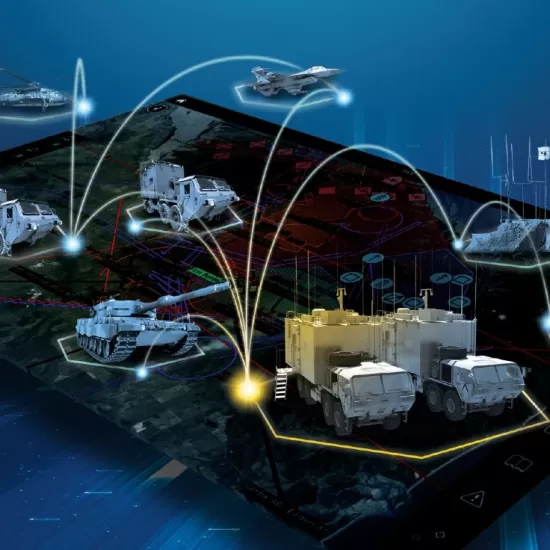
Modern systems are built to reduce the burden on people by filtering noise, shortening processes, and helping commanders see what would otherwise remain scattered across radios, maps, sensors, and separate units. Elbit Systems’ TORCH-X family, for example, reflects this direction by bringing information into a shared framework so that it can move more quickly and support decisions made with better context.
A commander looking at a digital map may receive an alert, a suggested route, a threat indication, or a recommendation generated from several streams of information. The machine can identify patterns. The commander still has to ask the harder questions: Is this the right moment? Does the mission justify the risk? What does the system not know? What has changed since the plan was made?
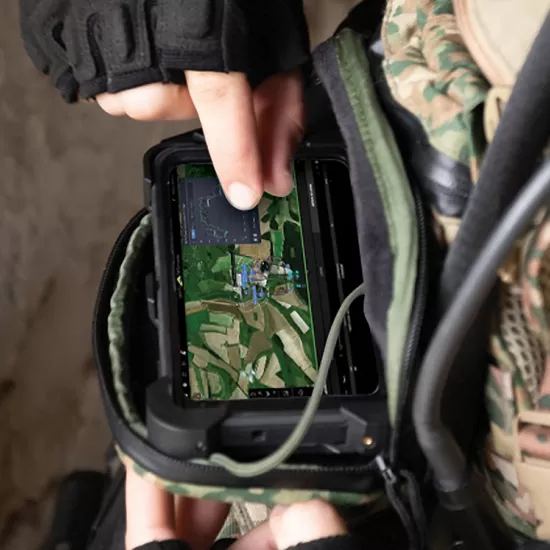
The same tension appears at the tactical edge, where soldiers operate under pressure and cannot afford long learning curves. Technologies such as HattoriX, an AI-enabled target acquisition system, are designed to make complex processes more intuitive for forward observers and tactical teams. A task that once required multiple manual steps can be shortened dramatically through a screen-based workflow. Still, the system’s speed is valuable only because a trained human understands the mission behind the action. A touch on a screen is not a substitute for judgment.
Time for Robots
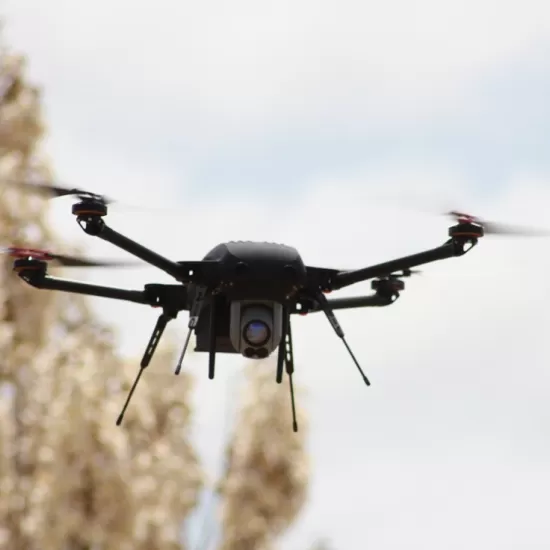
This is also true for robotic and autonomous platforms. Systems such as Dominion-X and autonomous micro-UAS solutions such as Magni-X point toward an environment in which unmanned assets can support reconnaissance, surveillance, and other missions with growing independence.
That independence can keep soldiers farther from danger, extend their reach, and allow one operator to manage multiple assets. But even here, the human role does not shrink into a ceremonial approval button. It changes shape. The operator becomes less of a manual driver and more of a mission manager.
This is the real challenge of human-machine teaming: not teaching machines to act like people but designing systems that allow people to remain responsible at machine speed.
Bad technology asks humans to adapt to it. Good technology adapts to the way decisions are actually made under pressure. It knows when to automate a routine task, when to highlight an anomaly, and when to stay out of the way. It does not bury the operator beneath menus. It does not confuse sophistication with usefulness. Most importantly, it leaves room for the one thing that cannot be coded into a platform: operational intuition built through training, experience, and accountability.
The future of defense technology will include more AI, more autonomy, more robotics, and more connected systems. That direction is already clear. The question is not whether machines will think faster. They will. The question is whether the systems around them will help humans think better.
For Elbit Systems, that means building technologies that strengthen the human role rather than compete with it. Systems should carry weight, not take ownership. They should accelerate decisions, not obscure responsibility. They should make autonomy usable, trusted, and disciplined while keeping commanders and operators where they belong: at the center of the mission.
FAQ
What is human-machine teaming in defense?
Human-machine teaming is the working relationship between soldiers and autonomous systems, where machines handle speed and data processing while humans keep judgment and responsibility. In defense, the goal is not to replace operators but to let them stay accountable at machine speed, deciding when to act, when to hold, and what the system cannot know.
Does military autonomy remove the human from the decision loop?
No. Greater autonomy raises the demand on human judgment rather than removing it. Autonomous systems can scan, detect, and recommend, but they do not understand intent, proportionality, or context the way a commander does. The operator shifts from manual driver to mission manager, staying responsible for every decision the system supports.
What does "human-in-the-loop" mean for autonomous weapons systems?
Human-in-the-loop means a trained person stays responsible for critical decisions, even when a system operates with growing independence. The machine identifies patterns and shortens processes, but a human still weighs the mission, the risk, and what has changed since the plan. Speed matters only because judgment sits behind the action.
How does Elbit Systems keep humans at the center of autonomous systems?
Elbit Systems designs technologies that carry weight without taking ownership of the decision. Platforms such as TORCH-X, HattoriX, Dominion-X, and Magni-X accelerate reconnaissance, target acquisition, and command decisions while keeping commanders and operators accountable. The aim is autonomy that is usable, trusted, and disciplined, not one that replaces the operator.
Important Notice: Certain blog articles may contain forward-looking statements and are not intended to provide business, financial, or investment information. Please review our full disclaimer here.