
Fighting Wildfires from the Sky with a Mission-Ready Squadron
Meet the aerial firefighting solution that helps nations respond faster and control fires before they escalate.
Governments worldwide are seeking faster, more effective ways to combat wildfires. The 'Elad' squadron, developed and operated by Elbit Systems, offers a scalable, autonomous aerial firefighting model that enhances national response capabilities – providing immediate, independent action wherever wildfires pose a threat to lives, infrastructure and nature. Its story is one of necessity, innovation, and a commitment to saving lives. This is how it all started.
A Proven Model for Aerial Firefighting
In 2010, wildfires swept through Israel’s Carmel Mountains, causing devastation and loss of life. Among those who responded was Elad Riban, a 16-year-old volunteer firefighter. Without hesitation, he left school, donned his uniform, and rushed to help contain the fire. Tragically, he lost his life in the line of duty, but his legacy endures.
To honor him, Israel established an aerial firefighting squadron bearing his name. What began as a national tribute has since evolved into a globally applicable model. Today, the Elad Squadron, operated by Elbit Systems, is more than a symbol – it is an operational success story, demonstrating how aerial firefighting can be deployed with efficiency, autonomy, and technological superiority. This model can be replicated anywhere, providing governments and emergency agencies with an end-to-end solution, from fleet establishment to training and ongoing operational support.
Eran Ben Shabat, former Director of Elbit System's Elad firefighting squadron, emphasizes that all personnel are deeply connected to Riban's remarkable spirit and commitment to preventing further casualties in wildfires. "You can say that his story serves as our squadron’s guiding principle and a constant reminder of our mission," Ben Shabat says.
Elad's story underscores the need for swift and effective firefighting solutions. On the day of the Carmel wildfire, he chose to leave school and report for duty, determined to assist in containing the disaster. He rushed to the scene and joined the firefighting efforts, but within two hours, the fire escalated, and he lost his life. His selfless actions earned him the Medal of Valor from the Israeli firefighting forces, recognizing his extraordinary bravery and commitment.
Ben Shabat reflects on Riban's dedication, explaining that the squadron's pilots and crews carry his legacy forward. "It wasn’t surprising that Elad spent his free time volunteering in the Fire Scouts branch instead of playing with friends," he says. "His dream was to become a firefighter or a pilot, and naming our squadron after him honors both aspirations."
Year-Round Readiness
This partnership between the government and Elbit Systems has proven to be an essential element in protecting Israel from devastating wildfires. "We view this as a genuine form of Zionism,” says Shoval, director of advanced aerial firefighting solutions at Elbit Systems. “Assuming such a responsibility is undoubtedly challenging. Yet, our team is so dedicated to the safety of the Israeli public that they consider it a privilege to be part of this endeavor."
Today, after more than a decade of operations, the Elad squadron operates as part of Elbit Systems’ firefighting unit, with extensive experience in aerial fire suppression.
“When a forest ignites, we could receive a call from the police operations room requesting immediate takeoff,” Shoval explains. “We maintain six planes on standby and up to 12 planes ready to deploy within 15 minutes throughout the year. This strategic readiness enables us to swiftly reach any location in the country.”
Scalable Firefighting Solutions for Global Challenges
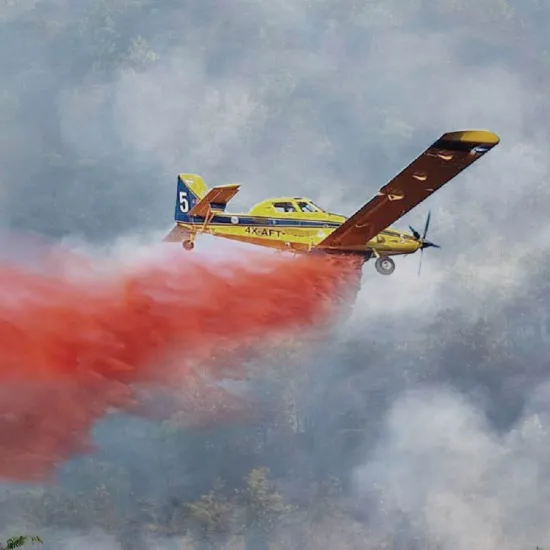
The firefighting force of the Elad squadron consists of 14 planes, all procured, serviced, and operated by Elbit Systems’ employees. Some of these aircraft are stationed at Kedma Airfield, covering the southern region of Israel, while the rest operate from Megiddo Airfield, protecting the north and the Golan Heights. In addition, the company maintains satellite airfields to shorten response times between sorties.
This operational model is not limited to Israel. With wildfires becoming more frequent and severe across the globe, other nations could benefit from establishing dedicated aerial firefighting squadrons based on the Elad model.
For example, if a wildfire breaks out in the Golan Heights, aircraft on standby at Megiddo are immediately dispatched. They are loaded with fire retardants and take off directly toward the fire site. After the first drop, they don’t return all the way to Megiddo but instead land at the nearest airfield, in this case, Rosh Pina Airfield, where they perform a refill. This reduces the flight time between drops from 15 minutes to just 4 minutes – an operational advantage that could be mirrored in any country facing wildfire threats.
When the Neighbors Call for Help
Firefighting planes have become a key tool in preventing large-scale forest fires. "Nearly every month, we see headlines about another country battling wildfires – whether in California, Italy, Greece, Cyprus, Canada, Australia, or elsewhere," says Shoval.
Elbit Systems already plays an international role in firefighting efforts. "We receive international assistance requests every year, and we always respond, deploying in these countries as needed. We coordinate closely with local authorities and existing air forces, ensuring seamless collaboration. Our teams arrive fully equipped and self-sustained, meaning we bring everything we need and require no additional supplies on-site."
This capability demonstrates the feasibility of establishing permanent, locally operated aerial firefighting squadrons worldwide, with Elbit Systems providing end-to-end support – from fleet procurement to operational training and ongoing maintenance.
No Room for Error
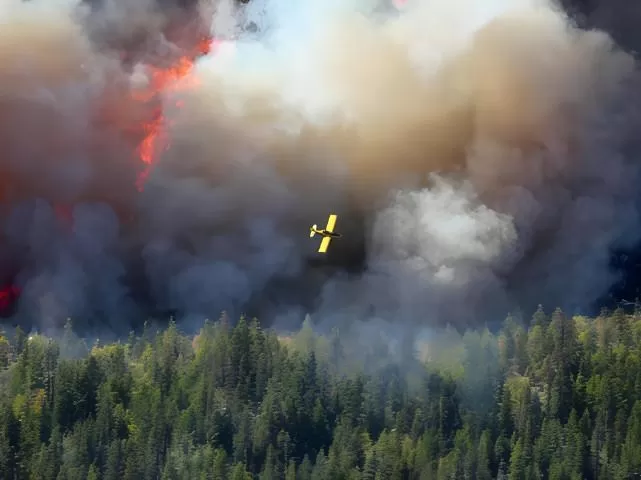
How does the firefighting plane, the distinctive yellow AT-802, strategically positioned above high-risk zones, effectively contain or extinguish wildfires?
Shoval: “Each aircraft carries around 3,000 liters of liquid, including water, foam, or fire retardant. The decision whether the planes should directly suppress the flames or primarily aid in restricting their progression to areas closer to civilians lies with the ground firefighters.”
Eran emphasizes that the Elad squadron provides Israel’s Ministry of Public Security with a decisive advantage. “The fusion of escalating temperatures – a direct result of ongoing global climate change – and the prevailing eastern winds in Israel can pose significant threats, occasionally even life-threatening ones,” he states.
“We leave nothing to chance in terms of readiness, particularly during those crucial periods of the year when fire incidents become more frequent. There are instances when our aircraft are simultaneously engaged in multiple locations.”
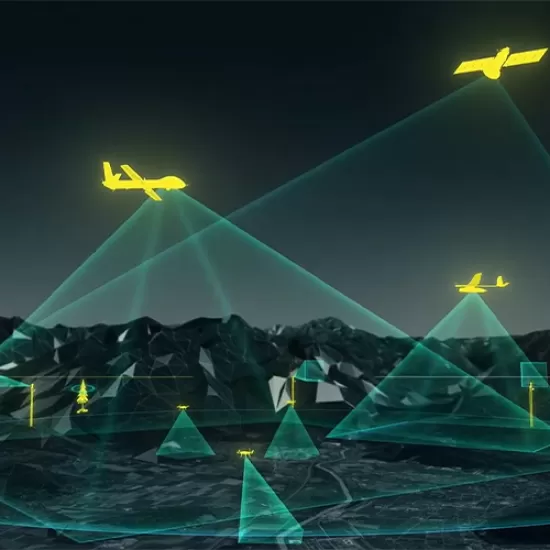
Shoval adds: "Additionally, since the planes have an aerial vantage point, they gain a clear view of how the fire is spreading and whether new hotspots have emerged. We relay this information to ground forces, helping to contain the fire and alerting them to additional outbreaks."
Eran highlights that each fire incident is subsequently examined to ensure that all parties draw the appropriate conclusions for continuous improvement. “Rooted in our IAF origins, this approach is second nature to us. We’re committed to being the best and enhancing ourselves, not only in terms of operational efficiency but also in the technical and technological facets of our work,” he concludes.
Building a Fire-Ready Future
Since its establishment in 2011, the Elad Squadron has developed a level of expertise that allows it to take on ambitious missions to protect Israel from wildfires. Now, that expertise is available to nations looking to strengthen their firefighting capabilities.
Establishing a dedicated aerial firefighting squadron – equipped with the right technology, trained personnel, and rapid deployment capabilities – can significantly enhance national emergency response efforts
With Elbit Systems’ experience in building and operating such squadrons, governments and organizations worldwide have an opportunity to adopt a proven model for tackling wildfires and protecting communities before disaster strikes.
FAQ
What is aerial firefighting?
Aerial firefighting uses specialized aircraft to deliver water, foam, or fire retardant to help contain and suppress wildfires while supporting ground firefighting crews.
How do aerial firefighting aircraft help stop wildfires?
Aerial firefighting aircraft can rapidly reach affected areas, slow the spread of fires, protect critical locations, and support firefighting operations on the ground.
What materials do firefighting aircraft drop on fires?
Depending on the mission, firefighting aircraft may release water, firefighting foam, or fire retardant to help suppress flames and reduce fire spread.
Why is rapid response important in wildfire suppression?
Fast deployment helps contain fires before they spread, reducing risks to people, infrastructure, natural resources, and nearby communities.
Important Notice: Certain blog articles may contain forward-looking statements and are not intended to provide business, financial, or investment information. Please review our full disclaimer here.