

Extending the Reach of Heavy Bombs
REST 84 adapts heavy unguided munitions for precision standoff strikes, helping air forces stay farther from advanced defenses without compromising hard-target penetration.
Key Takeaways
- REST 84 converts heavy unguided bombs into precision-guided standoff munitions
- It helps aircraft operate farther from advanced air defenses while retaining the ability to strike hard targets
- Extending the range of heavy bombs requires a balance between long glide profiles and steep impact angles of more than 60 degrees
- The system offers a cost-effective way to upgrade legacy bomb inventories rather than replace them with entirely new missile systems
The evolution of air defense systems has forced a reassessment of how air forces approach strike missions. Increasingly, survivability depends not only on stealth or speed but on distance, keeping platforms outside the effective range of advanced defensive systems while still delivering meaningful effects on target.
This shift has elevated the importance of standoff capabilities, particularly for precision-guided munitions. While range-extension kits have become widely available for lighter bombs, a gap remains in the heavy-weight category, where operational requirements are more complex and technical constraints more demanding.
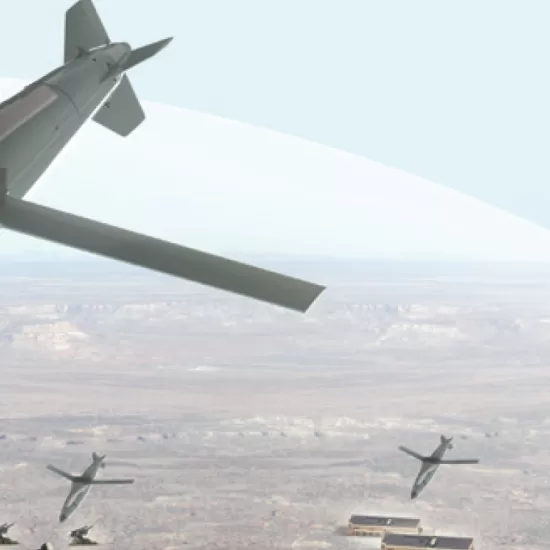
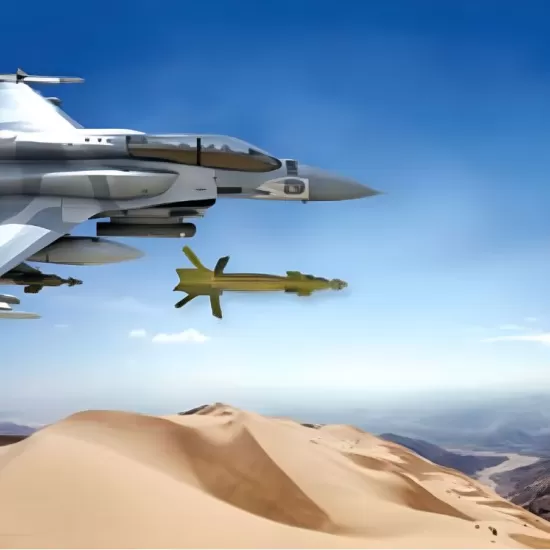
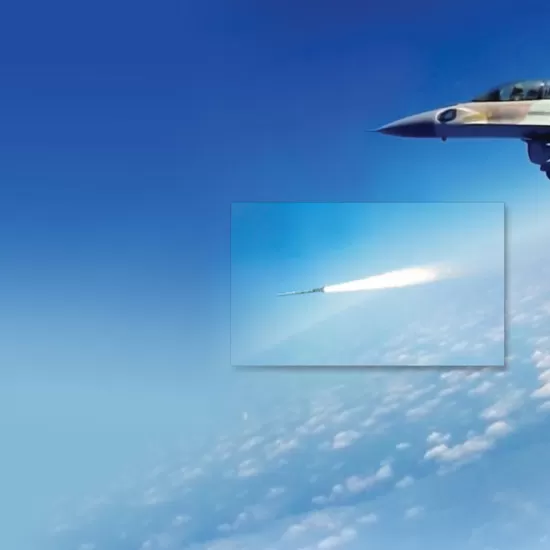
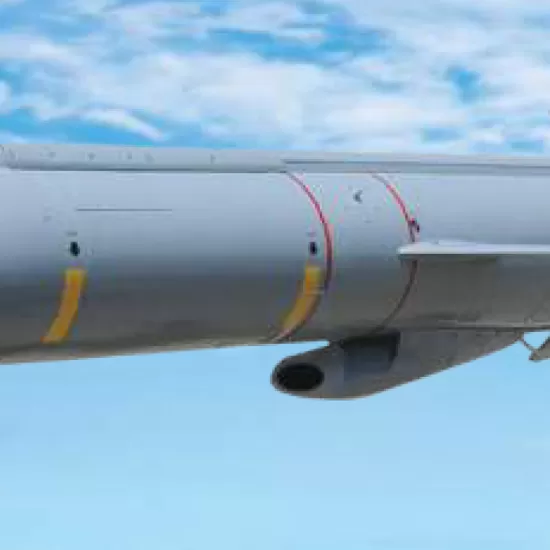
Elbit Systems addresses this challenge with its REST (Range Extension Smart Tail), a wing kit designed to convert unguided bombs into precision-guided standoff munitions. Conceptually similar to systems such as the JDAM-ER, REST introduces aerodynamic surfaces and guidance components that extend glide range.
The Physics of Standoff Attack
Most existing solutions in this category focus on munitions in the 100 to 500 kilogram class. However, operational experience has highlighted scenarios in which significantly heavier payloads are required, particularly for hardened or deeply buried targets, as well as for cross-border engagements where standoff distance is essential.
Extending the range of such munitions is not a straightforward scaling problem.
Heavier bombs must still achieve steep impact angles, often exceeding 60 degrees, to ensure effective penetration. At the same time, they must glide over extended distances from high-altitude release points. Balancing these requirements introduces aerodynamic and structural challenges that differ fundamentally from those associated with lighter systems.
REST 84, developed in cooperation with Israel’s Directorate of Defense Research and Development (MAFAT), is designed specifically for this segment. By enabling heavy munitions to be deployed from greater distances, it supports operational concepts that prioritize platform survivability without sacrificing penetration capability.
Reflecting growing demand for solutions that bridge the gap between legacy bomb inventories and modern standoff doctrines. Additional engagements are underway with other international partners.
Extending Relevance
Beyond its immediate operational role, REST reflects a broader trend in procurement: maximizing the value of existing arsenals. Rather than replacing legacy munitions with entirely new missile systems, range-extension kits offer a pathway to upgrade existing inventories in a cost-effective manner.
This approach is particularly relevant in an environment where air forces must maintain readiness across multiple theaters simultaneously. Standoff capability becomes not only a tactical advantage but also a means of preserving high-end assets for scenarios where they are most needed.
In that sense, REST is less about introducing a new class of weapon and more about extending the operational relevance of what already exists, adapting it to the demands of a more contested and distance-driven battlespace.
Key Specifications (Specs)
- System Type: Range-extension wing kit for heavy unguided bombs
- Guidance and Range Extension: Aerodynamic surfaces and guidance components that extend glide range and improve accuracy
- Release Profile: High-altitude release for extended standoff distance
- Impact Angle: More than 60 degrees to support effective hard-target penetration
- Development: Developed by Elbit Systems in cooperation with Israel's Directorate of Defense Research and Development, MAFAT
FAQ
What Is REST 84?
REST 84 is a range-extension system designed to convert heavy unguided bombs into precision-guided standoff munitions.
Why Do Air Forces Need a System Like REST 84?
Advanced air defenses can force aircraft to remain farther from their targets. REST 84 enables the use of heavy munitions from greater distances while preserving their operational effect.
Why Is Extending the Range of Heavy Bombs So Challenging?
Heavy bombs must glide over extended distances while still achieving steep impact angles, often exceeding 60 degrees, for effective penetration of hardened or deeply buried targets.
What Types of Missions Is REST 84 Designed For?
The system is intended for missions against hardened or deeply buried targets, as well as cross-border engagements where standoff distance is essential.
Does REST 84 Replace New Missile Systems?
No. REST 84 provides a way to upgrade existing bomb inventories, giving legacy munitions a precision-guided standoff capability without requiring an entirely new missile system.
What Is REST 84's Maximum Range?
The article does not specify a maximum range. It describes REST 84 as enabling extended glide profiles and greater standoff distance from high-altitude release points.
Important Notice: Certain blog articles may contain forward-looking statements and are not intended to provide business, financial, or investment information. Please review our full disclaimer here.