

Extending the Life of a Classic
What does it take to elevate a third-generation attack aircraft to fourth-generation standards without replacing the airframe?
When the customer first approached Elbit Systems’ Aerospace Division, the requirement was still taking shape. Its air force relied heavily on the Sukhoi-25, a rugged and widely operated close air support aircraft. Leadership initially focused on improving navigation performance. As discussions matured, however, the objective expanded.
What began as a series of basic cockpit upgrades evolved into a comprehensive modernization effort aimed at elevating a third-generation platform to fourth-generation operational standards.
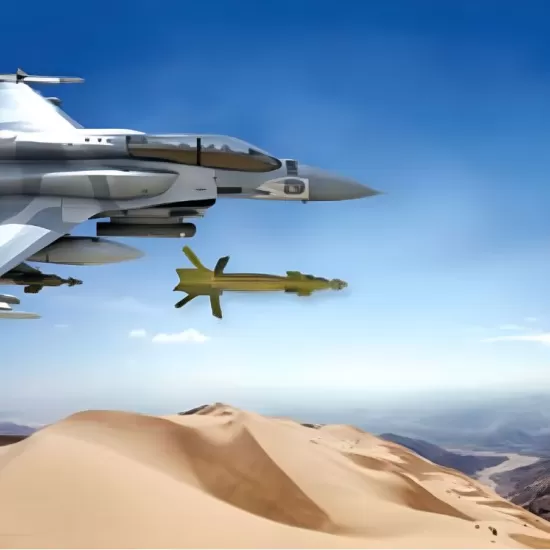
This required the introduction of navigation suites, advanced avionics, and modern cockpit displays. It also included enhanced mission management applications, improved weapon capability and lethality, and the integration of precision-guided munitions such as the LIZARD 3 and LIZARD 4. These systems have been fielded widely and are known for delivering operational effectiveness with controlled lifecycle costs.
Preserving the Platform, Expanding Its Capability
Unlike extensive modernization efforts, this program did not seek to strip the aircraft and rebuild it from the ground up. The objective was to retain existing systems wherever feasible and extend their operational value.
This demanded disciplined engineering analysis: determining which subsystems could remain in place, which required enhancement, and how new capabilities could be integrated without disrupting legacy architecture. The outcome was not a superficial refresh, but a comprehensive upgrade affecting every operational layer of the aircraft.
From the outset, collaboration with the customer was close and continuous. While many programs are structured primarily at ministerial or senior command levels, this effort included direct interaction with operational crews. Pilots who initially approached the modernization cautiously gradually came to rely on the new systems. Over time, capabilities that once seemed unfeasible became embedded in routine operations.
From Concept to Flight
The cooperation began roughly three years ago. In its early stages, the emphasis was on demonstrating tangible capability rather than relying on presentations alone. The customer was invited to Israel to observe systems in operation, reinforcing confidence that the proposal extended beyond conceptual materials.
Once kicked off, the program progressed through predefined phases. Elbit Systems formalized cockpit architecture, display configurations, system layout, and operational workflows. Only after the customer approved both the design framework and operational logic did the solution development begin.
The aircraft then entered the modernization phase, which included removal of legacy equipment, mechanical and electrical modifications, installation of new hardware, and comprehensive ground integration testing. Several integration cycles were completed before proceeding to flight testing. Even after airborne validation, refinement continued to ensure performance, reliability, and pilot usability met operational and safety requirements.
Today, the upgraded aircraft is regarded as a significant national milestone within the customer’s air force.
A Complete Mission Architecture Approach
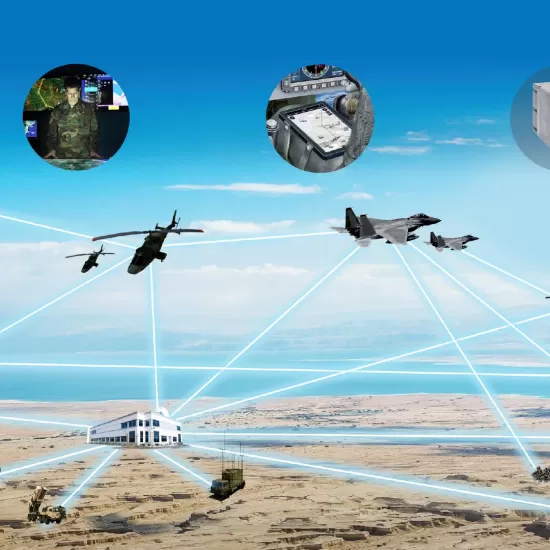
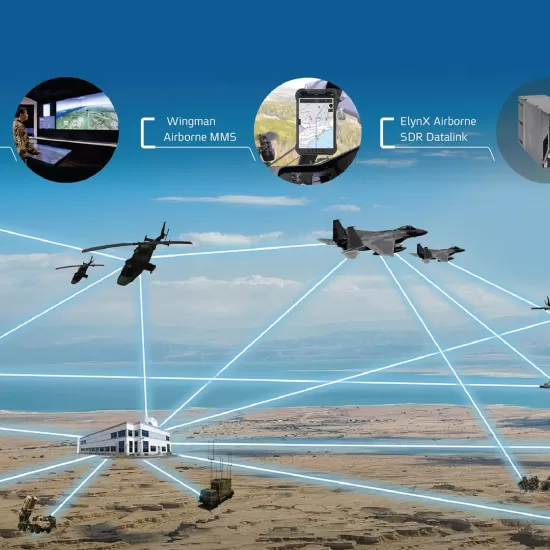
An Aircraft upgrade extends well beyond cockpit modernization. It introduces advanced airborne connectivity, enabling improved air-to-air and air-to-ground coordination, as well as closer integration between air and ground formations. This network-centric operation layer is increasingly viewed as a baseline requirement in contemporary operational theaters. The networked operation extends beyond the air operation and is comprised with an advanced high-end Aerial C4I application, connecting all members to the operational network.
The modernization is structured around three core dimensions. The first focuses on flight performance and the human-machine interface. Enhanced navigation capabilities, upgraded display systems, and pilot-oriented applications strengthen safety, situational awareness, and workload management.
The second dimension centers on mission effectiveness. Advanced computing architecture, mission management systems, precision-guided weapons integration, and expanded processing capacity enhance operational flexibility and resilience in dense threat environments.
The third dimension addresses protection and survivability. Electronic warfare systems and defensive suites improve aircraft resilience, while additional capabilities support operations in degraded visibility and adverse weather conditions, enabling mission execution in contested environments with a reduced exposure profile.
A Cost-Effective Capability Advance
For many air forces, acquiring entirely new platforms remains financially prohibitive. The Sukhoi-25 modernization illustrates how substantial capability gains can be achieved without replacing an entire fleet, delivering operational improvements at a fraction of the cost of new procurement.
Elbit Systems’ experience in aircraft mission upgrades – spanning fighter jets and rotary-wing platforms – underpins this approach. The objective remains consistent: introduce the next step in connectivity, lethality, mission systems, and survivability, allowing air forces to narrow the gap between existing assets and evolving operational requirements.
Beyond the Aircraft Upgrade, Elbit Systems utilizes its vast experience in fleet operations and offers end-to-end solutions, addressing maintenance and logistic support, and covers the Air Force need for both pilot and operation training.
At a time when integration between air assets, ground forces, and command networks has become essential, modernization programs of this type expand the operational relevance of legacy platforms.
Important Notice: Certain blog articles may contain forward-looking statements and are not intended to provide business, financial, or investment information. Please review our full disclaimer here.